
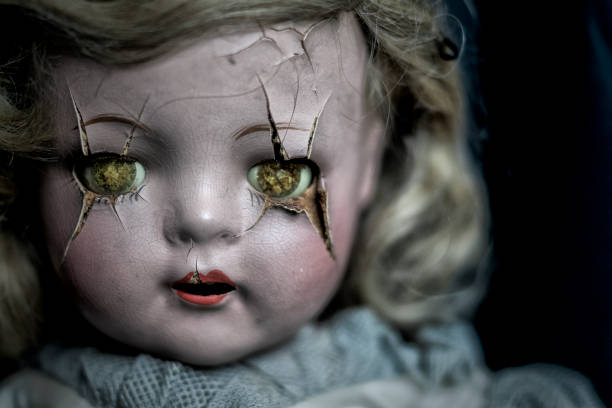
The elastic on her left sock was frayed. Stubborn strings sprung out from the once perfect band, creating a fuzzy halo around her ankle. Clara sighed, touched the left corner of her mirror and took the socks off. She lined the pair up from toe to heel, folded the band over the top, made a perfect little bundle, and threw it into a pristine trashcan. After the ninth and final flip of the light switch, she reached with her left hand into a plastic drawer. Lined up there, like little toy soldiers still in their package, row after row of white, and only white socks, 8 to a pack stood on call. She picked a pair on the left, arranged the rest to cover the negative space left by their comrade and shut the drawer three times. This made her just sad enough to admonish herself for her irrationality, but not sad enough to keep from indulging in it. She liked her white socks.
Converse, perfectly crisscrossed laces, tight enough to rival an amputation tourniquet, favorite blue hoodie with flawless stitches where seams have given up, pressed jeans, and the trusty knitted cap. The yarn’s once vibrant red was now muted and it smelled a little like mothballs, but she loved it nonetheless. With all her sensory controls in order, Clara brushed her hair exactly fifteen times on each side and stepped outside her door.
She immediately went back inside to repeat the process. This time it took. She braced herself, took a deep breath and a very small step.
Avoiding the first crack on her stoop (which Mrs. Felcher has promised to have her “handy man” fix for the entirety of Clara’s stay in the guest house), Clara saw her breath billow in a perfect little cloud. It was 5:44 in the morning, and despite the overwhelming gray and Mrs. Feltcher’s trout pout peeking through the blinds, she felt light. Clara made it down the stoop and all the way to the sidewalk with ease. She only had to come back to jump the crack twice.
She didn’t get out much, unless she had to go to work. The pollution was everywhere. Deafening roars of engines, rumble of voices (somehow the unhappiest people were the loudest), and then of course, there were the germs.
Her hands received four hits each time she didn’t “wash them properly”. Ms. Whittle would never tolerate such habits in a young lady; Ms. Whittle would recall instantly her debutant youth in Georgia; Ms. Whittle would remind Clara that she could never be as special as her mother, but she could at least try. [Left at the red house]
Ms. Cordelia Whittle. In her pressed suits, string of pearls always around her thin crinkled neck, snow-white hair with glimpses of youthful chestnut restrained in a ballet bun, was always an alluringly terrifying figure. [44 steps to the crosswalk]
When Clara was six, she saw a porcelain doll in a dusty window of an antique shop. She was nothing like the rest of the items in there; they all looked like they smelled of sweat and sadness, but she, she was beautiful. [Fold sleeve carefully over the index finger. Press the useless WALK button]. Extravagant ruffled floor-length white dress with blue ribbons woven into the bodice, [Press it 2 times] a delicate hat, [Press it 2 more times] nestled on top of shiny brown curls [PRESS IT 2 MORE TIMES] that framed most flawless features she’d ever seen. [Cross] All Clara wanted to do was play with it, hug it, make her new dresses, and take her everywhere. She wanted to name her Sophia. [count the number of white cars at the light] Yet the fear of breaking it, somehow tarnishing it by simply being near it, was palpable. [Stand on the left side of the bus stop awning] Ms. Whittle made her feel the same way. [Wait] Clara was never allowed to call her grandma. [Count your heart thumps] It was too informal, too childish, too warm. [Don’t touch anything] The day of her mom’s funeral was the only time Clara felt Ms. Whittle’s touch soften. [Don’t touch anything] She ran her stern hand over Clara’s hair, after a stiff hug fixed the collar of a dark blue woolen dress that was way too tight around Clara’s awkward preteen frame, and tucked a stubborn curl strand behind her ear. [Don’t touch anyone]
If there was hell, bus #4 was it. When a short, bald man sneezed right into her armpit, Clara twitched. Milky white fluid lingered on her sleeve, making her skin crawl. She hated milk as much as she hated bodily fluids expelled at any time, anywhere, by anyone. Clara took allergy pills religiously, without ever having been diagnosed with or ever exhibiting any symptoms of the affliction. She preemptively dried out her sinuses, and never ever drank milk. Anymore. Ms.Whittle’s bony hand sternly scooting a glass of 2% in front of Clara was a formative experience that lingered well into her teenage years. “You need the calcium dear, for someone as…sturdily shaped as you, you sure appear to be sickly”, her voice chimed like the bells of a small and tidy church down the street from Ms. Whittle’s house. Ms. Whittle’s grandiose, precious monster of a house. Its alabaster white columns, the wrap-around porch, white wicker chairs on the veranda, white roses surrounding the entire property, white doilies on coffee tables, white aprons on her servants, and those white pearls, menacingly swaying anytime Ms. Whittle dragged Clara into the cellar, were clinical and cold.
The fact that Clara now worked as a morgue technician, had nothing to do with the association of familiarity with clinical coldness, no matter what her therapist said. Clara’s brain was simply wired better to handle tasks that required emotional separation and intense precision. If she had to have OCD, she might as well use it. Clara found her reasoning satisfactory, even for herself; at least for herself. Her cuts were exact, stitches were meticulous, and she preferred to work alone. She didn’t need or want to have meaningless interactions with coworkers about weekends and outings, pets, and more meaningless interactions with said pets or other people. Clara preferred silence, books, and her dolls. When she received her first paycheck from Sacred Heart Memorial, she spent half of it on rent, and the other half on a genuine 92 cm golden-locked, blue-eyed, porcelain beauty called Sandra. While the buyer’s remorse has kicked in immediately after Confirm Purchase button was pressed, Clara never truly regretted it. Sandra reminded her of Sophie, well at least she thought she looked like a Sophie, looking out of that dusty antique window, with her beautiful white dress, blue ribbons, and sheer unattainability. She couldn’t have Sophie then, because young ladies who behaved like little piggies, weren’t allowed to have such fragile and beautiful things. Young ladies who didn’t wash their hands, brush their hair, and gorged themselves on sweets, were only deserving of dampness and cold, and moldy wet cellar straw. Clara began to make dolls then, out of that straw, and an occasional moldy potato forgotten by Ms. Whittle’s cook. A matchstick or two, some twine, and Clara could have herself a few figurines, some company to pass hours, or days maybe, until she heard that cellar door latch clang open.
So that hobby stuck, it may have developed from loneliness, but it has turned into true passion. Well at least what Clara thought constituted passion. She loved Sandra, and Lily, and Kate, they were the real deal, and she admired the craftsmanship, the intricate details, the human hair woven into their heads and eyelashes. But the girls also cost a real deal type of penny. Clara couldn’t afford to not eat, she has tried. Considering an option of skipping a meal or five wouldn’t be a detriment, her sturdy frame could sure afford it. But after hallucinating strongly by day seven, she decided maybe she could try making dolls instead. This time she wouldn’t have just straw, and she wouldn’t use moldy potatoes. Clay and polymer were the rare treat she could afford, so she learned to paper mache, and still order inset glass eyes, meticulously sewing in each eyelash, and tiny wigs. The hair parts took the longest. Ordering horse hair was too weird, and synthetic was ugly. She had to wait to shed enough hair, or to grow enough to get it cut. Being patient sucked. But synthetic hair was ugly. Too cold, clinical, too fake. Irony wasn’t lost on her, preferring warmth in her fake companions was the balance Clara made peace with.
After years of practicing, crying over incorrectly mixed paper mache paste, a lost eyeball, or wasted hairs, Clara got brave enough to try to make a doll that was at least 3 feet tall. Gladys. Gladys was slightly clunky. Gladys needed improvement. Clara still had a hard time with proper body proportions. In smaller dolls, she could hide their imperfections easier, if one boob was larger than the other, or their waist was lumpy, she’d dress them accordingly (she had a lot of 90s grunge dolls hanging around), but Gladys was too obvious. She was sturdy, but needed to be… better. Also Gladys still needed more hair. Clara got into a an unfortunate habit of tweezing some of her own hair out, because having the actual hair follicle at the end, made it easier to sew it into the tiny eyelid or wig holes. The left side of her head was colder than the right, but no one asked her to take her hat off at work, so no one saw the bald patches. It will grow back anyway.
That night Clara sat at her desk, twirling blue scissors in a measured tempo, when her screen door rattled under a knock. Startled, Clara tripped over Gladys’ naked foot and stumbled to the door. Tapping the door knob four times, she slowly opened it. She couldn’t decided whether the man at her door looked more like that jarring food critic from the movie with a rodent that cooks, or a mortician. He was tall, lanky, either a very rough 70 or he should’ve been pushing daisies by now. He spoke with a slight Southern drawl, which he appeared to have spent most of his life attempting to disguise. Over annunciating his syllables, he introduced himself as Mr. Morris, Mr. Joseph Morris. The plot thickened, as his Bond-esque cadence echoed through the air. Clara really wanted to tap the door jamb. Just once, she thought wistfully, knowing full well, it had to be at least a fiver. After a very pregnant pause Mr. Joseph Morris, asked her to confirm that she was in fact Clara Beatrice Crawford, and as she shuddered at her full name, Clara nodded. He was a family friend (whose family?) And has been assisting with Ms. Cordelia Whittle’s affairs, and as Clara is aware, she has been quite ill for some time (oops, Clara in fact, was NOT aware). Since she remained her only family member within driving distance, Mr. Morris highly suggested that Ms. Whittle be looked in on, since she has managed to refuse anyone audience. And since Clara may gain some inheritance in the near future (yeah right), he sincerely hoped she could persuade Ms. Whittle to settle her final affairs and paperwork. Clara nodded, the pause swung in the air like Spanish moss. Mr. Morris appeared satisfied, albeit slightly confused, he turned on his heels rather sprightly, and started walking away into the dusk. Clara didn’t know how to explain that her nodding wasn’t an agreement, that she hasn’t seen that woman in over 15 years, and that the last time she saw her, she vowed to never do so again. She couldn’t explain that a simple acknowledgement that Ms. Whittle was dying, was the best she could muster. She didn’t want anything from her. It was going to be all white probably anyway, always bright, insane asylum white… By the time she could make at least a semblance of a noise, Mr. Morris was screeching down the street in his Grecian white Cadillac Coupe DeVille.
At this point it is irrelevant how many days she took to decide, and how many hours it took to drive barely a 40 minute drive, but Clara did. Why, is another question altogether.
The grandiose house appeared tired, but no less imposing. There was more white, somehow. Now that she apparently couldn’t supervise the gardener in person, Ms. Whittle simply ordered more white and only white plants to be planted, to ward off any wild life that may wander onto her pristine lawns. Clara was sure that those directions were followed to the t, even though Ms, Whittle would never find out if they weren’t, simply due to sheer terror that tiny woman instilled in anyone who has been in contact with her longer than 30 seconds. White daffodils, oleander, and white blooms of what appeared to be garlic, framed the veranda mostly (in case she could get herself strong enough to look out that window?), but not much else. Clara gave a mental high five to the gardener du jour for being clever, and looked for a corner to touch. The foyer smelled like the cellar. The sitting room, the drawing room, the tea parlor, the stairs all smelled of mildew and wet straw. As Clara crept up the grand staircase to Ms. Whittle’s master bedroom, she felt cold sweat dripping down her back. She has never been allowed in it. Not even around it. Clara couldn’t remember when she was ever not on the first floor. “Ms. Whittle?” A tiny yelp escaped Clara’s throat, as she pushed the white oak door open. “Ms. Whittle… I…” The smell of mold rocked her, almost pushing her back out of the room. A tiny figure clad in white, long sleeved, ruffled night gown, groaned, turning her silver white nape towards Clara. Somehow, still tightly wrapped in a ballet bun, Ms. Whittle’s hair was now fully silver, made her appear like a ghost of Christmas something. Clara remembered saying who she was, Clara remembered saying why she was there, somehow convincing herself at the same time. Clara remembered Ms. Whittle’s bony hand scribbling all of her four names on lines marked with yellow sticky notes on the necessary paperwork.
What Clara didn’t remember was making the oleander tea. Or what Ms. Whittle said, if anything, while she sipped it. Or using the back entrance to the morgue. Or making the paper mache paste. She didn’t remember her neat stitches, precise cuts, and making room for the inset bright blue eyes she ordered a week ago, replacing the pitch black pupils that now stared into nothing. She didn’t remember rearranging the silver hair and curling it into ringlets. She was nothing like her usual figures on the metal table that smelled of sweat and sadness. The bones rested beautifully underneath the layers of paste, smoothing out all the wrinkles Ms. Whittle collected through her lifetime like honor badges. No. She… She was beautiful.
 Gaya Ink